2026-09-08
Laos Regulatory Update | Rubber rules introduce processing licences, raw-material trade restrictions and oversight of carbon credits
Decision No. 3899/MoAE addresses rubber business registration, processing standards, raw-material imports and exports, carbon credits and reporting duties.
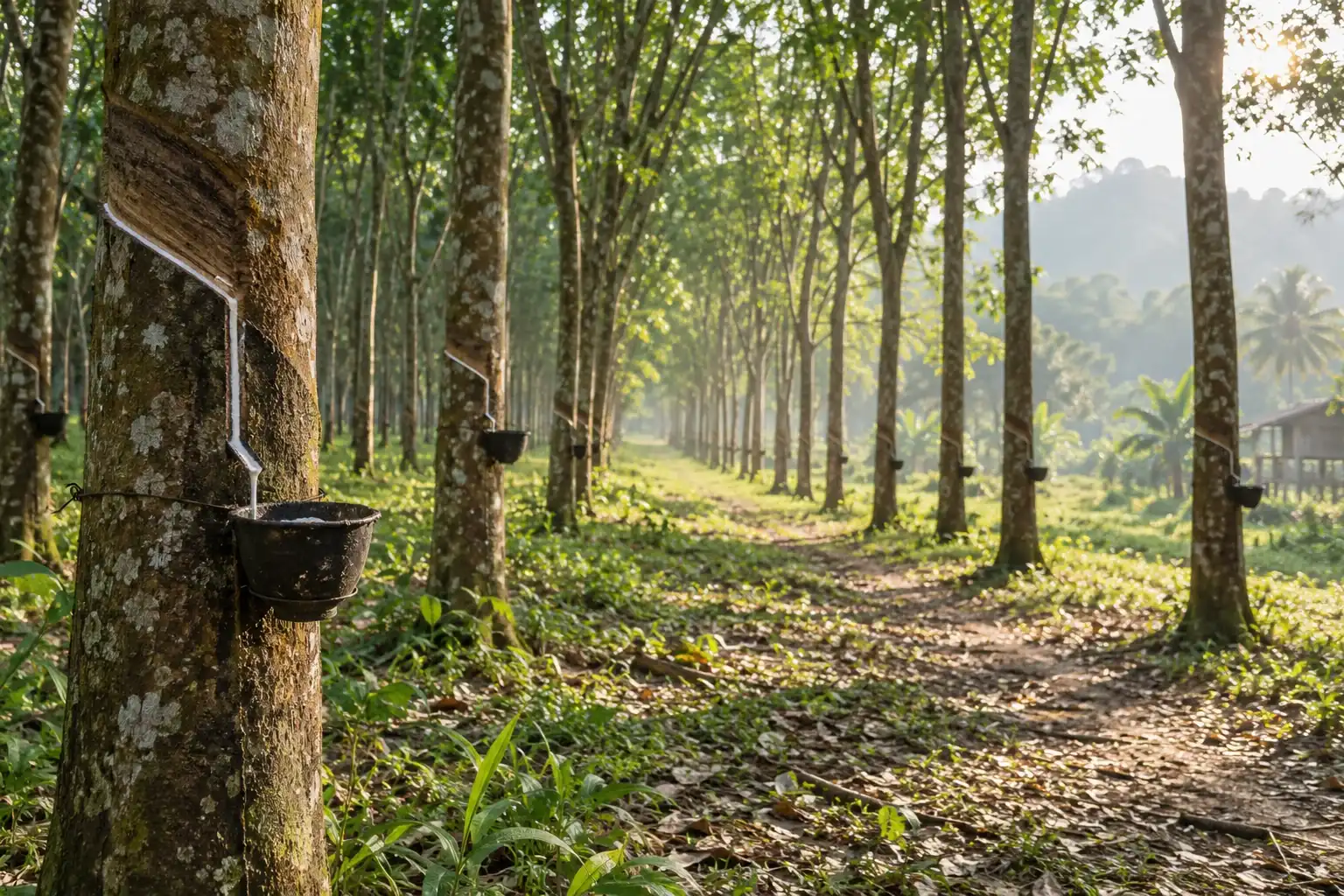
Laos has developed a sizeable natural rubber industry. According to 2025 industry information, rubber plantations cover approximately 320,000 hectares nationwide: about 60% in the north, 17% in the centre and 23% in the south. Foreign-invested enterprises operate approximately 70% of the production area through concessions or contract farming, while smallholders account for around 30%. In 2024, rubber exports were worth approximately USD 450 million, placing rubber among the country's ten leading export commodities. China and Vietnam are the principal destinations, reflecting an industry still centred on plantation, primary processing and export. Vietnam Rubber Group, a major foreign investor, has more than 26,600 hectares planted in Laos, including approximately 24,600 hectares under tapping. In 2025, it produced approximately 37,000 tonnes of rubber and recorded exports of about USD 65.63 million. Rubber is therefore an important agricultural export industry, but domestic downstream processing remains limited. This helps explain the 2026 rules' emphasis on processing licences, restrictions on fresh latex and cup lump imports and exports, and greater domestic value addition.
Legal basis: Decision on Rubber Business No. 3899/MoAE, dated 28 August 2026.
I. Summary
Decision No. 3899/MoAE, issued on 28 August 2026, aims to standardise the nationwide management and inspection of rubber businesses and rubber processing factories.
It applies to multiple activities:
- Rubber seedling production;
- Commercial planting;
- Rubber trading;
- Processing;
- Imports and exports;
- Carbon credit trading associated with rubber plantations.
Key requirements include registration and the obtaining of the relevant business licence from the Ministry of Agriculture and Environment (MoAE) or the provincial agricultural authority, depending on whether the processing factory is small, medium or large.
The Decision also sets specific factory standards covering location, infrastructure, machinery and equipment, environmental compliance and safety.
It expressly prohibits the export and import of fresh latex and cup lump rubber, with the aim of promoting processing in Laos and increasing the added value of rubber products.
Factories must closely monitor raw-material inputs and product outputs and report regularly to the district agricultural authorities.
The Decision sets out operators' rights and obligations, including compliance with environmental standards, worker safety and tax obligations.
The Department of Forestry is designated as the lead regulator and coordinates implementation with provincial and district authorities.
II. Brief commentary
The Decision is an important step towards more systematic regulation of Laos's rubber industry. The industry has expanded rapidly, but certain activities previously faced relatively limited oversight. Through clear operating standards and a licensing system, the government aims to improve production efficiency, strengthen environmental sustainability and move the industry up the value chain.
The express prohibition on exporting raw materials such as fresh latex and cup lump is a significant policy change, intended to encourage domestic processing and increase production of higher-value products.
This is consistent with Laos's broader economic development goals, but may also require operators to invest more in domestic processing capacity.
Particularly noteworthy is the inclusion of carbon credit trading generated by rubber plantations within the regulatory scope. This forward-looking provision reflects the growing importance of environmental markets and may create new income streams for plantation operators.
Effective implementation will, however, depend substantially on the regulatory capacity of the Ministry and local authorities, particularly given the relatively strict environmental and safety standards for processing factories.
Detailed input/output records and quarterly reporting duties will also increase administrative compliance burdens. Businesses may need to establish more robust data management systems.
The transition period set by the Decision runs until 9 October 2026. It is an important window for affected businesses to adjust their operations to the new requirements.